World Heritage Photos

Saltaire, a Victorian model village

Saltaire was built as a model workers' village between 1851 and 1876. Saltaire was founded by Titus Salt, the village takes its name from a combination of the Aire River and the name of the founder Titus Salt. Saltaire is situated close to Leeds in Great Britain and about 50 km from the UNESCO World Heritage Studley Royal Park nearby Ripon. Titus Salt realized an ideal workers' village close to his factory. The workers were provided with homes, gardens, schools, a public wash house, churches, a hospital and all necessary local services. The houses were provided with running water and indoor water closets. Gas was supplied for heating and lighting. Saltaire used to have its own fire service. Saltaire is an outstanding example of a workers' village from the Victorian Era. The village of Saltaire consists of 22 streets, 805 houses and 45 almshouses. The almshouses were built to accommodate 45 elderly, not necessarily former employees or villagers. The streets carry the names of the members of the Salt Family, The names of Queen Victoria and her consort Albert are included along with the two architects of Saltaire, Lockwood and Mawson. The World Heritage Site Saltaire is still inhabited. Another 19th century workers' village is Crespi d'Adda in Italy. Saltaire gained the status as a UNESCO World Heritage in 2001.

www.werelderfgoedfotos.nl   © Copyright   World Heritage Photos
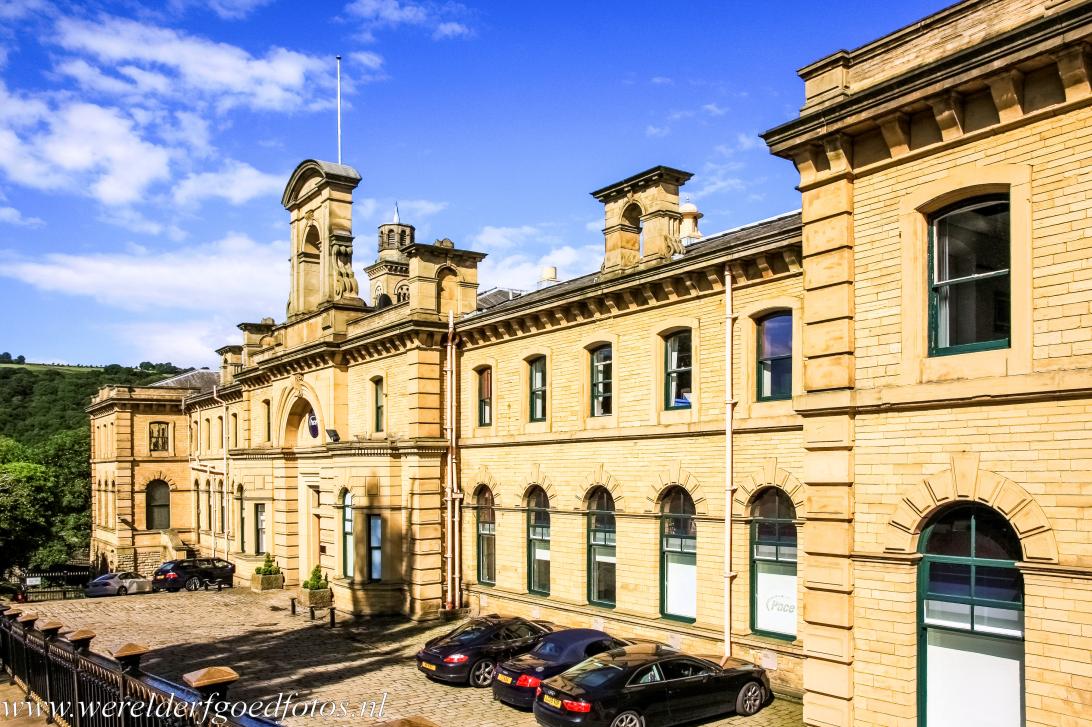
Saltaire, a Victorian model village - Salts Mill is the former textile factory of the workers' village Saltaire. Saltaire was founded by the owner of the Salts...

Salts Mill is the former textile factory of the workers' village Saltaire. Saltaire was founded by the owner of the Salts Mill, Titus Salt. The village is situated on the banks of the river Aire. The village of Saltaire takes its name from a combination of the surname of the founder, Salt, and the name of the river Aire. Saltaire was inscribed on the UNESCO World Heritage List in 2001.

  1. Saltaire, a Victorian model village - Salts Mill is the former textile factory of the workers' village Saltaire. Saltaire was founded by the owner of the Salts...

    Salts Mill is the former textile factory of the workers' village Saltaire. Saltaire was founded by the owner of the Salts Mill, Titus Salt. The village is situated on the banks of the river Aire. The village of Saltaire takes its name from a combination of the surname of the founder, Salt, and the name of the river Aire. Saltaire was inscribed on the UNESCO World Heritage List in 2001.

  2. Saltaire, a Victorian model village - Saltaire, a Victorian workers' village: The Company Dining Hall was available for the staff of Salts Mill to bring their own food and...

    Saltaire, a Victorian workers' village: The Company Dining Hall was available for the staff of Salts Mill to bring their own food and have it cooked. They could purchase a cup of tea or coffee, a bowl of soup or a plate of meat. A passageway led beneath the road from the yard of Salts Mill to the Company Dining Hall. All Salts Mill buildings were constructed from the same local warm-coloured sandstone.

  3. Saltaire, a Victorian model village - Workers' village Saltaire: The former Congregational Church, now the Saltaire United Reformed Church. The church was built in 1858-1859....

    Workers' village Saltaire: The former Congregational Church, now the Saltaire United Reformed Church. The church was built in 1858-1859. The mausoleum (at the right hand side) is the final resting place of Titus Salt. The original six bells of the tower were removed and melted down for munitions in 1933. The tower nowadays houses a new peal of bells cast by Royal Eijsbouts in the Netherlands. These bells carry the biblical names Mary, Peter, Lydia, Jonathan, Martha and Titus.

  4. Saltaire, a Victorian model village - The Victorian model village of Saltaire: The village houses in Victoria Terrace are situated near the Saltaire United Reformed Church....

    The Victorian model village of Saltaire: The village houses in Victoria Terrace are situated near the Saltaire United Reformed Church. The tall chimney of the New Mill rises behind the houses. The ornate chimney was built in the Italianate style and based on the campanile of the Basilica di Santa Maria Gloriosa dei Frari in Venice. Like the Venetian campanile, the chimney is topped with an octagonal lantern. Saltaire has remained largely unchanged since Victorian times.

  5. Saltaire, a Victorian model village - Saltaire: The Head Office of Salts Mill on Victoria Road was built in the Italianate style, a popular architectural style in the 19th...

    Saltaire: The Head Office of Salts Mill on Victoria Road was built in the Italianate style, a popular architectural style in the 19th century. Most of the factory buildings in Saltaire were built in this style. Nowadays, Salts Mill houses a number of shops and the 1853 Gallery, which features work made by David Hockney, who was born in the nearby town of Bradford.

  6. Saltaire, a Victorian model village - The Victorian model village of Saltaire: A row of small 19th century workers' houses. Saltaire was built between 1851 and 1876 as a...

    The Victorian model village of Saltaire: A row of small 19th century workers' houses. Saltaire was built between 1851 and 1876 as a model workers' village. Saltaire was founded by the successful businessman and politician Titus Salt. He created an ideal workers' village not far from his own textile factory. The workers were provided with homes, gardens and all necessary local services.

  7. Saltaire, a Victorian model village - Saltaire: A row of 19th century small workers' houses, with the bell tower of the Saltaire United Reformed Church in the background. The...

    Saltaire: A row of 19th century small workers' houses, with the bell tower of the Saltaire United Reformed Church in the background. The houses of Saltaire were provided with running water and indoor water closets, and gas was supplied for heating and lighting. Saltaire is not only a historic monument, it is a UNESCO World Heritage where people live and work. Saltaire is a well preserved Victorian village.

  8. Saltaire, a Victorian model village - The Victorian model village of Saltaire: The 19th century workers' houses. The village of Saltaire consists of 22 streets, 805 houses and 45...

    The Victorian model village of Saltaire: The 19th century workers' houses. The village of Saltaire consists of 22 streets, 805 houses and 45 almshouses. The workers of the textile factory of Titus Salt were provided with homes, flower gardens and vegetable gardens, and all necessary local services, a school, a library, a hospital, a public wash house and the almshouses for the elderly.

  9. Saltaire, a Victorian model village - Saltaire: The former Salt Grammar School. The building is nowadays part of the Saltaire Shipley College. The school is located on Victoria Road,...

    Saltaire: The former Salt Grammar School. The building is nowadays part of the Saltaire Shipley College. The school is located on Victoria Road, opposite the Victoria Hall. The school, which was opened in 1868, was provided with central heating and gas lights. It also has a large playground at the rear of the building. The school was originally divided into two sections, one for the boys and one for the girls.

  10. Saltaire, a Victorian model village - Workers' village Saltaire: The Victoria Hall was built in the Italianate style and completed in 1871. The Victoria Hall or Saltaire Club &...

    Workers' village Saltaire: The Victoria Hall was built in the Italianate style and completed in 1871. The Victoria Hall or Saltaire Club & Institute was erected for the benefit of the community. It was both a social club and an educational institute. It housed a reading room, a library, a room with billiard tables and an art school. Nowadays, it houses the Reed Organ museum and local clubs.

  11. Saltaire, a Victorian model village - Saltaire Hospital is situated next to the almshouses. The hospital was built in 1868 and, when it opened, it had only six beds. Saltaire...

    Saltaire Hospital is situated next to the almshouses. The hospital was built in 1868 and, when it opened, it had only six beds. Saltaire Hospital was enlarged in 1908 and again in 1925. At first, Saltaire Hospital was a casualty ward for accidents at the Salts Mill but developed into a cottage hospital for the whole community. It was converted into flats in 2001.

  12. Saltaire, a Victorian model village - Saltaire, a workers' village: Shops along Saltaire Road. The first row of shops was completed on Victoria Road in 1854, including a post...

    Saltaire, a workers' village: Shops along Saltaire Road. The first row of shops was completed on Victoria Road in 1854, including a post office. There were no pubs built in Saltaire. According to Titus Salt, pubs and alcoholic drinks had a bad influence. Saltaire gained status as a UNESCO World Heritage Site in 2001. The workers' village Saltaire is a village where people live and work.